Essentially for our video we want it to be as creatively shot as possible. This in effect means we are going to challenge ourselves with the angles, cutaways and focus points we plan to use.
We are taking our band to Camden, London to shoot the majority of the film. The reason for this is the fact that the song has a number of mild drug references (predominantly marijuana) taking this in to account we decided on Camden because it is a bit of an indie scene with lots of "Head Shops".
The video will be shot in a "day of" style. For example the protagonist will be miming the lyrics to the song as he walks around Camden and the rest of his day. While this is happening we plan to use multiple cameras to get some interesting shots and the occasional time lapse.
We want the video to confront a few taboos in society today, neither of us particularly believe art should be censored. So while we are aware that we have to work within some sensible boundaries we aren't going to shoot a film fit for a five year old because ultimately the song isn't aimed to at a five year old. Its aimed at a fairly niche demographic to whom these topics and the things we're going to be filming will not only be in their interests but will also entertain and be relatable to them.
The fact the song doesn't have a "story line" almost dictates that our video doesn't have to have one either. We plan to make full use of this, , most songs have a narrative running through that the video is often based around and follows fairly religiously. keeping in mind ours doesn't and the genre doesn't stipulate a particular generic narrative, for example Love Songs have a standard concept that most videos follow. We wont have that which gives us the freedom and flexibility we needed and wanted to incorporate from this points above.
Wednesday, 19 December 2012

Monday, 17 December 2012
Radio Drama Notes
Codes & Conventions:
- Meaning - whats going on
- Effect - how do you want the audience to feel about it.
- Narrative code (story)
- Technical (SFX, Voice Over, Music)
- Verbal (dialogue)
Star Wars -
- lots of background noise to establish the scene
- Theme music
- Wind (landing spacecraft)
- Voices getting louder indicating movement of actors.
- Sound bridge (foreboding music - villains)
- Dialogue of intercom
- Swooping engins
- Explosions
- Volume to show proximity of the other characters and settings
- Audio "panning" to give the effect of movement across the speakers.
Dr Who -
- Sci-Fi-esque opening music
- News presenter style to open this story
- A message from what can only be assumed as "ground control" setting the context for the entire show.
- echo effects on the scream to add intensity.
- Dark music changes the tone of the discussion
- Depth of field to indicate movement of characters
- Inner monologue
- Wide variety of tone and severity in voices to compensate for the lost visual aspect.
Multi-Cam
fHistory of the Multi-Camera Production:Multi-camera video production use's of a minimum of 3 video cameras (generally speaking) and dates back to early television, for example a 3 camera production was used to broadcast "The Queen's Message" as early as 1928, the first multi-cam drama on TV. The BBC has been using multi cam productions for their live broadcasts since 1936 and continued to use this method of filming for Sitcoms and Drama's through the 1950's to 1960's, the only change made was introducing a 4th camera.
As camera prices continue to fall, an increasing amount of professionals are discovering that having multiple, synchronized angles truly makes editing alot quicker and smoother. A multi-camera shoot can save enormous amounts of time and money during post production and so is becoming a popular choice with production companies across the world.
The Untied States continued using single cam's during this time was predominant until a 'Hybrid' style of production evolved. This consisted of inserts filmed with a single cam, largely filmed on location. These shots were then mixed with interior scenes shot on a multi cam setup inside a studio, this method is still largely used by ITV and the BBC and can be seen in television shows such as Coronation Street and Eastenders today.
As technology began to develop ever quicker, productions shot on location began to use a multi electronic camera setup and this held true for ongoing soap-opera shows. Prime time television dramas were and still are largely shot on single cam's due to being cheaper and more efficient in the studio.
Mutli-Cam VS Single Cam
For a talking head, tour of a complex, instructional video etc a single camera productions is the most effective method of filming,. Things like stop/start filming, short segments or location changes are all best suited to being filmed with a single camera.
To cover live performances, chat shows, theater work or anything lengthy or anything that involves filming something that cannot be repeated e.g sporting events, feats of wonder etc is best filmed on a multi-camera setup.
A multi cam production is a far more engaging and interesting production to watch that a single cam production. Multi-cam work is like most television shows that people would watch, eg The Big Bang Theory or Two and a Half Men, there are many different points of view throughout the show that can all be filmed at once. Whereas a single camera can only show one point of view at any one point. To change viewpoint means you have to stop and start recording as you move camera and re-set it (all this while running the risk of missing something valuable). The only alternative is to have the camera on a dolly in which case you can see the camera moving around and may not give the desired professionalism.
Mutli-Cam productions are made by filming with a number of independent cameras then editing all the footage together or live-switching between the camera's (on location) with a vision mixer. All the cameras are cabled together and centrally controlled by both a vision mixer and a director to decide the shots.
Independent filming using a multicam set up can be more expensive because of all the post-production editing time (the length of the show, multiplied by how many cameras you have, plus the time to edit.) Live-switching with a mulicam production is virtually edited as you go along, so the production is essentially finished at the end of filming, with the added bonus of the director controlling what the cameras are doing while they are filming, making sure all the shots are in order and co-ordinated.
You can produce a live-switched multicam production for roughly the same cost as a single cam, sometimes cheaper and certainly faster. A live-swtiched multi cam production costs are easy to work out from the beginning, it is essentially going to cost whatever your going to do on the day. (set up, film, pack up, transportation and materials) Since there is generally not alot of editing to be done afterwards. Alternatively in a single cam production theres a lot of editing involved, alot of the time its hard to estimate how long the editing will take. More often than not the editing is a long a tedious process often several times longer than the actual footage itself. For example: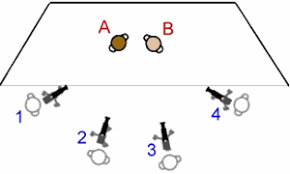


Looking at The Big Bang theory, a multi camera production, you can see the wide variety of angles put to use. Alot of mid shots are used mainly due to the fact that more often than not the scene is a group scene featuring multiple people and diverse settings. They also use alot of wide angle panning shots to establish the scene setting. The sets they use are regular features. Spanning from the protagonists apartments to the comic book store, as well as the university (their place of work). Also they use an awful lot of close ups as alot of the actors, especially Sheldon, convey alot of their performance through their facial expressions, making close ups a must. One thing that i feel should be noticed is the fact that the show is always shot from one direction. This is due to the fact that the entirety of the set is shot in studio setting and thus physically could not be firmed from any other directions.
I think the reason that this show is a multi cam is due to the fact that a) its a comedy, so having multiple cameras will enable the production team to capture whatever unplanned/unscripted parts happens in a wide variety of angles and a much higher likelihood of capturing a usable "improv" moment. b) The fact that its a comedy show almost necessitate's the need for a multi cam. Having a number of different cameras at a number of different angles means the cast can just cleanly run through the scene and thus makes the jokes a lot smoother and a lot more like real life. Opposed to single cams where you would have to consistently be stopping and starting and there would be no sense of naturalism regarding the jokes told in the show.
Advantages
Disadvantages


As camera prices continue to fall, an increasing amount of professionals are discovering that having multiple, synchronized angles truly makes editing alot quicker and smoother. A multi-camera shoot can save enormous amounts of time and money during post production and so is becoming a popular choice with production companies across the world.
The Untied States continued using single cam's during this time was predominant until a 'Hybrid' style of production evolved. This consisted of inserts filmed with a single cam, largely filmed on location. These shots were then mixed with interior scenes shot on a multi cam setup inside a studio, this method is still largely used by ITV and the BBC and can be seen in television shows such as Coronation Street and Eastenders today.
As technology began to develop ever quicker, productions shot on location began to use a multi electronic camera setup and this held true for ongoing soap-opera shows. Prime time television dramas were and still are largely shot on single cam's due to being cheaper and more efficient in the studio.
Mutli-Cam VS Single Cam
For a talking head, tour of a complex, instructional video etc a single camera productions is the most effective method of filming,. Things like stop/start filming, short segments or location changes are all best suited to being filmed with a single camera.
To cover live performances, chat shows, theater work or anything lengthy or anything that involves filming something that cannot be repeated e.g sporting events, feats of wonder etc is best filmed on a multi-camera setup.
A multi cam production is a far more engaging and interesting production to watch that a single cam production. Multi-cam work is like most television shows that people would watch, eg The Big Bang Theory or Two and a Half Men, there are many different points of view throughout the show that can all be filmed at once. Whereas a single camera can only show one point of view at any one point. To change viewpoint means you have to stop and start recording as you move camera and re-set it (all this while running the risk of missing something valuable). The only alternative is to have the camera on a dolly in which case you can see the camera moving around and may not give the desired professionalism.
Mutli-Cam productions are made by filming with a number of independent cameras then editing all the footage together or live-switching between the camera's (on location) with a vision mixer. All the cameras are cabled together and centrally controlled by both a vision mixer and a director to decide the shots.
Independent filming using a multicam set up can be more expensive because of all the post-production editing time (the length of the show, multiplied by how many cameras you have, plus the time to edit.) Live-switching with a mulicam production is virtually edited as you go along, so the production is essentially finished at the end of filming, with the added bonus of the director controlling what the cameras are doing while they are filming, making sure all the shots are in order and co-ordinated.
You can produce a live-switched multicam production for roughly the same cost as a single cam, sometimes cheaper and certainly faster. A live-swtiched multi cam production costs are easy to work out from the beginning, it is essentially going to cost whatever your going to do on the day. (set up, film, pack up, transportation and materials) Since there is generally not alot of editing to be done afterwards. Alternatively in a single cam production theres a lot of editing involved, alot of the time its hard to estimate how long the editing will take. More often than not the editing is a long a tedious process often several times longer than the actual footage itself. For example:
- Watching through the unedited material deciding which clips to use. (This takes a bit longer than all your footage combined.)
- Editing the clips together (this takes as long as each clip plus the time to tidy each edit.)
- Checking the smoothness of the entire edit as you go along.
- And then sound editing, which is done independently of the video editing. But still takes just as long as each clip and thus creates a long winded process.

Almost all filming takes a certain degree of editing and this needs to be taken in to account when deciding the best way to film. Single camera work involves editing every shot taken as well as the sound. Mutlicam involved the same, multiplied by your amount of cameras. Whereas live-switch multicam's involve little more than VT's involved and credits either side of the show, which is possible to do live. Editing in the middle of the production shouldn't be necessary unless something goes wrong. So in summary if you filmed for a day with a single cam production you would be editing for roughly 1/2 days. A multicam production, filming for a day would result in roughly a week of editing. Compared to a live-switch multicam production which is roughly a day of filming and very little editing.

Looking at The Big Bang theory, a multi camera production, you can see the wide variety of angles put to use. Alot of mid shots are used mainly due to the fact that more often than not the scene is a group scene featuring multiple people and diverse settings. They also use alot of wide angle panning shots to establish the scene setting. The sets they use are regular features. Spanning from the protagonists apartments to the comic book store, as well as the university (their place of work). Also they use an awful lot of close ups as alot of the actors, especially Sheldon, convey alot of their performance through their facial expressions, making close ups a must. One thing that i feel should be noticed is the fact that the show is always shot from one direction. This is due to the fact that the entirety of the set is shot in studio setting and thus physically could not be firmed from any other directions.
I think the reason that this show is a multi cam is due to the fact that a) its a comedy, so having multiple cameras will enable the production team to capture whatever unplanned/unscripted parts happens in a wide variety of angles and a much higher likelihood of capturing a usable "improv" moment. b) The fact that its a comedy show almost necessitate's the need for a multi cam. Having a number of different cameras at a number of different angles means the cast can just cleanly run through the scene and thus makes the jokes a lot smoother and a lot more like real life. Opposed to single cams where you would have to consistently be stopping and starting and there would be no sense of naturalism regarding the jokes told in the show.
Advantages
- More camera shots in a shorter space of time - this is acheived by having more cameras recording at any one point. This removes the need for scene repeats in order to get different angles.
- Flow of the show - because there is a number of cameras recording one scene the realism of the dialogue appears a lot greater because there isnt the need to cut different angles of the same dialogue together to create variation. All the dialogue is from one take. This makes the smoothness of the entire show increase dramatically.
- More shots to edit with - by using multiple cameras you get multiple shots and angles of everything that happens. This gives you an awful lot more room to work with when it comes to post production editing. Compared to single cam where you have a much more acute range of shots to work with.
- Audience involvement - one of the biggest problems with multi-cams is the perceived "canned laughter" This was an issue created by journalists and critics who were initially opposed to multi cam productions. It makes it very difficult to report that something isnt funny when you have a room full of people rolling in laughter that directly contradicts that. Audience involvement tells the viewer when they should be laughing and what exactly is funny. This increases the amount the audience at home actually laughs at the show. Having laughter already fixed to the show as a track is actually a very useful convention for convincing the audience at home that these things are funny. Sub-consciously we react to this stimuli.
Disadvantages
- Cameras/equipment could get in the way of shots - with more equipment comes more risk. You need to have all this equipment wired up, something that is a huge risk on a set. You also have to find a way to make these cameras moveable without getting in one anothers way. But more importantly you have to make sure none of this extra equipment gets in shot.
- Lighting - With increased view from all the cameras you have to make sure that the lighting is exactly the same regardless of what area or angle you are shooting form. This can be extremely difficult and is something that has to be well planned and thought through when creating a multi cam project.
- More cameras, more organisation - With a single cam production all you have to worry about is the one angle you want to be shooting from. When using a multi cam production you have to plan extensively exactly what each camera will be shooting. This ties in to the discussion above. If you have a multi cam set up of 4 cameras, that means you need to have 4 shot lists for each camera. 4x the camrea = 4x the work.
- More hazards - see above.
- Communication - see above.

This is a close up shot from a multi cam production.

This is a mid shot from a multi cam production.

This a wide angle shot from a multi cam production.
Friday, 14 December 2012
F.M.P
Accuracy -
- Get your facts right
- Good, Indepth research - Books, Magazines, Internet (secondary)
- Talking to people (Primary
- If its not accurate you will lose credibility and the viewer loses trust in the film maker.
- Legality - If inaccurate can be accused of Defamation of character, libel and slander.
- Balance/Bias/Impartiality
Representation -
- Stereotyping - lower class teenager (trackies, hoodies, sweats) upper class teenager (smart, shirt, trousers, tie, waistcoat etc)
Objectivity & Subjectivity -
- Objective is factual
- subjective is hypothetical or personal approach
Privacy -
- Identity/ethical
- copyright
Wednesday, 12 December 2012
Multi-cam Evaluation
Production 1:
I felt on the day this production was fragile despite the confidence we shared as a group. We were all sure of how well it would go without realizing exactly how close we were to failure.
The morning of the day started well. The set was up and looking excellent thanks to Georgie, everything was running to plan. Claudia had everything in control, George and Georgie had all the the lights and sound set up and the guests were beginning to arrive.
The lead up to this day although was a little slow, without real knowledge of the task at hand procrastination set in, an abundance of coffee breaks and talking nonsense. This being said we did all thoroughly enjoy what we were doing, setting up the set was a lot of fun and compared to being sat in a stuffy class room we saw this as a little bit of a luxury. Georgie really showed initiative with the set and the use of props with the help of myself Seb and Andrew. George worked hard at setting up the cameras and all the tech, he showed a genuine knowledge of the equipment he was working with and implemented those skills in to our show on the day to an excellent effect. Its the little things that make the difference, the details. George created alot of these details.
The entire show was a success in my eyes, im rather proud of how i worked. I was given the camera with the most use of angles and movement which really gave me an opportunity to get a little creative with the camera, I think I used that opportunity well to get some good shots. Up to the point of the show actually running in front of the audience, I put in a lot of effort to assist everyone that I could. I don't think Seb had a particularly easy time with his role as floor manager and seemed to struggle to find the strength of character he so regularly shows. Because of this i made an effort to assist him and carry the slack and I think I did this well, using me skills with people to make sure the guests and audience members where happy while Seb made sure the studio was set up, safe and had his notes for the running of the show. Which ultimately ran smoothly most down to the fact we were able to have a number of run through's focusing on different aspects of the show.
The final run of the show was a success. With everyone pulling together and our combined efforts really contributing to a good show that ran smoothly and short of one or two minor errors with cameras (of which Claudia dealt with superbly.) I think the general attitude of the group afterwards and the collective grades reflect that.
Production 2:
The second production was far more trickier than the first. With a jaded group and a far more ambitious project the cracks began to show fairly quickly. Disputes among the group started to arise, people not pulling their wait, personal issues and general unrest really affected our work all the way up untill the day before we were due to get in to the studio with all our pre-production done, this was almost not going to happen.
Once we got in to the studio the group was largely divided. Claudia was away for the majority of the morning collecting the costumes for some of our improv artists aswell as for our scripted extras. Seb was working on the fireplace prof after arriving a little late and George was instructed to complete the final cuts for the first VT's to be played in the show live. This left Andrew, Georgie and I to construct and paint the set, construct the set, arrange the studio effectively and generally have every set up for early afternoon when George and Claudia had arrived. We got all this done extremely quickly and had time to film the shots we need for the short VT in the show. While Andrew and I were filming the shots George was setting up lights and Seb was running improv games with some of our artists.
I think despite all our problems we really worked well as a group on the first day in the studio. We left ourselves with enough time to run rehearsals late afternoon following in to the next day. This was luxury i dont think any of the other groups had been afforded. I think this shows the ability we have individually as well as a group, the ability to pull of such a large project after so many problems having arisen.
The second day short of one significant problem arising went largely speaking, without a hitch. Everything was set up in the morning, perfectly. All the props were in place, all the costumes were arranged and ready to be used, all the lights, sound and cameras were set up and our scripted actors were running lines. We were happy and confident that this show was going to be a success. We ran in to a problem one of our improv artists had dropped out. We were done essentially. Without all of our improv artists we couldnt do the show. Thankfully Mr Neil Hunt, our presenter, stepped in to fill his shoes. With Steve Launay to fill in at short notice for Neil. We were back on, with a new sense of invigoration we all pulled together to finish the show at a good standard.
Georgie and I began juggling all the assailant things that needs addressing. Georgie worked excellently controlling everyone and delegating effectively and assertively, this made my job so much easier and her professionalism and ability to be aware of everything made sure that i was able to focus on making sure the studio was safe, that all our guests and prepare for the audience who would be arriving shortly.
I think when the audience came in I performed exactly how I had hoped I would. I was confident and tried to be interactive with the audience with the hope to build up their excitement as much as i could. I ran through health and safety and instructed everyone to switch off their phones and ran some applause and laughter instructions and we were ready to shoot.
The entire show went almost perfectly, despite the potentially show ruining issue with our our improv artist, everything went better than I could have hoped for. Everyone seemed to enjoy the show, everyone in the show outdid themselves. Everything went smoothly, I put this down to both dedication and hard work from certain members of the group and a reliable force of 1st years really putting in the hard yards to help us out and make the whole thing happen.
I think it's about time I both criticize and applaud my performance over the two projects. The first one i didnt have anywhere near the freedom but also responsibility i had in our second production. The first one i worked behind other peoples ideas. Working hard to make their visions and ideas a reality and largely supporting the more dominant members of the group. Upon reflection im pleased with how i worked one this project as it gave me experience working within a team and learning that while it doesn't necessarily have to be my ideas and concepts I still have the ability to be a useful member of the team and can assist people to help thing become a little more seamless and picking up the slack where i can. I enjoyed this role because i enjoy giving people my support and im fully of the opinion that if you support someone as best you can, it brings out the best in their performance as well as your own.
I felt on the day this production was fragile despite the confidence we shared as a group. We were all sure of how well it would go without realizing exactly how close we were to failure.
The morning of the day started well. The set was up and looking excellent thanks to Georgie, everything was running to plan. Claudia had everything in control, George and Georgie had all the the lights and sound set up and the guests were beginning to arrive.
The lead up to this day although was a little slow, without real knowledge of the task at hand procrastination set in, an abundance of coffee breaks and talking nonsense. This being said we did all thoroughly enjoy what we were doing, setting up the set was a lot of fun and compared to being sat in a stuffy class room we saw this as a little bit of a luxury. Georgie really showed initiative with the set and the use of props with the help of myself Seb and Andrew. George worked hard at setting up the cameras and all the tech, he showed a genuine knowledge of the equipment he was working with and implemented those skills in to our show on the day to an excellent effect. Its the little things that make the difference, the details. George created alot of these details.
The entire show was a success in my eyes, im rather proud of how i worked. I was given the camera with the most use of angles and movement which really gave me an opportunity to get a little creative with the camera, I think I used that opportunity well to get some good shots. Up to the point of the show actually running in front of the audience, I put in a lot of effort to assist everyone that I could. I don't think Seb had a particularly easy time with his role as floor manager and seemed to struggle to find the strength of character he so regularly shows. Because of this i made an effort to assist him and carry the slack and I think I did this well, using me skills with people to make sure the guests and audience members where happy while Seb made sure the studio was set up, safe and had his notes for the running of the show. Which ultimately ran smoothly most down to the fact we were able to have a number of run through's focusing on different aspects of the show.
The final run of the show was a success. With everyone pulling together and our combined efforts really contributing to a good show that ran smoothly and short of one or two minor errors with cameras (of which Claudia dealt with superbly.) I think the general attitude of the group afterwards and the collective grades reflect that.
Production 2:
The second production was far more trickier than the first. With a jaded group and a far more ambitious project the cracks began to show fairly quickly. Disputes among the group started to arise, people not pulling their wait, personal issues and general unrest really affected our work all the way up untill the day before we were due to get in to the studio with all our pre-production done, this was almost not going to happen.
Once we got in to the studio the group was largely divided. Claudia was away for the majority of the morning collecting the costumes for some of our improv artists aswell as for our scripted extras. Seb was working on the fireplace prof after arriving a little late and George was instructed to complete the final cuts for the first VT's to be played in the show live. This left Andrew, Georgie and I to construct and paint the set, construct the set, arrange the studio effectively and generally have every set up for early afternoon when George and Claudia had arrived. We got all this done extremely quickly and had time to film the shots we need for the short VT in the show. While Andrew and I were filming the shots George was setting up lights and Seb was running improv games with some of our artists.
I think despite all our problems we really worked well as a group on the first day in the studio. We left ourselves with enough time to run rehearsals late afternoon following in to the next day. This was luxury i dont think any of the other groups had been afforded. I think this shows the ability we have individually as well as a group, the ability to pull of such a large project after so many problems having arisen.
The second day short of one significant problem arising went largely speaking, without a hitch. Everything was set up in the morning, perfectly. All the props were in place, all the costumes were arranged and ready to be used, all the lights, sound and cameras were set up and our scripted actors were running lines. We were happy and confident that this show was going to be a success. We ran in to a problem one of our improv artists had dropped out. We were done essentially. Without all of our improv artists we couldnt do the show. Thankfully Mr Neil Hunt, our presenter, stepped in to fill his shoes. With Steve Launay to fill in at short notice for Neil. We were back on, with a new sense of invigoration we all pulled together to finish the show at a good standard.
Georgie and I began juggling all the assailant things that needs addressing. Georgie worked excellently controlling everyone and delegating effectively and assertively, this made my job so much easier and her professionalism and ability to be aware of everything made sure that i was able to focus on making sure the studio was safe, that all our guests and prepare for the audience who would be arriving shortly.
I think when the audience came in I performed exactly how I had hoped I would. I was confident and tried to be interactive with the audience with the hope to build up their excitement as much as i could. I ran through health and safety and instructed everyone to switch off their phones and ran some applause and laughter instructions and we were ready to shoot.
The entire show went almost perfectly, despite the potentially show ruining issue with our our improv artist, everything went better than I could have hoped for. Everyone seemed to enjoy the show, everyone in the show outdid themselves. Everything went smoothly, I put this down to both dedication and hard work from certain members of the group and a reliable force of 1st years really putting in the hard yards to help us out and make the whole thing happen.
I think it's about time I both criticize and applaud my performance over the two projects. The first one i didnt have anywhere near the freedom but also responsibility i had in our second production. The first one i worked behind other peoples ideas. Working hard to make their visions and ideas a reality and largely supporting the more dominant members of the group. Upon reflection im pleased with how i worked one this project as it gave me experience working within a team and learning that while it doesn't necessarily have to be my ideas and concepts I still have the ability to be a useful member of the team and can assist people to help thing become a little more seamless and picking up the slack where i can. I enjoyed this role because i enjoy giving people my support and im fully of the opinion that if you support someone as best you can, it brings out the best in their performance as well as your own.
On the second production I was in a position of power pretty much from the get go. The whole group got behind my ideas and really wanted to make a good go of it. I felt a good amount of support from the group who initially seemed to be right behind everything that i wanted to do. All the slightly far out concepts and ludicrous ideas i spout sometimes people seemed to really listen to and have a respect for.
This could all be utter non-sense but these are simply my observations. No one can tell you whether they are wrong or right.
I tried as hard as i could to keep and air of confidence and belief even when things seemed to be spiraling out of control (which wasn't particularly easy) and i think i carried this well, giving a good overall performance when it came to it. I think this reflected in the grade i was given.
I thoroughly enjoyed all the negatives and positives of the entire experience and feel as though i learnt alot. It intrigues me to see if i could perhaps work in this sort of environment in a sense of career.
This could all be utter non-sense but these are simply my observations. No one can tell you whether they are wrong or right.
I tried as hard as i could to keep and air of confidence and belief even when things seemed to be spiraling out of control (which wasn't particularly easy) and i think i carried this well, giving a good overall performance when it came to it. I think this reflected in the grade i was given.
I thoroughly enjoyed all the negatives and positives of the entire experience and feel as though i learnt alot. It intrigues me to see if i could perhaps work in this sort of environment in a sense of career.
radio drama notes
Radio Drama Notes:
* Background crowd noise
* Cutlery clinking
* Silence to signal end of the scene
* Alot of emphasis on tone and over the top inflections on words to set tone.
* A sort of "depth of field" to indicate the size of building or type of building they are at.
* Use of inner monologue's outloud to set tone of characters true feelings.
* Heavy use of technology and device sounds to indicate whats going on
*
*
*
*
Subscribe to:
Comments (Atom)