Borley Rectory was built in 1863 but it was not until 1927, when the Reverend Smith's wife discovered in a cupboard in the house, a brown paper package containing the skull of a young woman, that trouble started. The servant bells began ringing although their cords had been cut, unexplained lights were seen at the windows and footsteps were heard. Mrs. Smith also saw a ghostly horse-drawn carriage.
So unnerved were the Smiths that they contacted a daily newspaper and asked to be put in touch with the Society for Psychical Research. The SPR were interested and sent their own investigators to the scene.
Harry Price arrives
Meanwhile, the newspaper arranged for Harry Price to visit the Rectory. Immediately he entered the house, objects including a vase and stones were apparently thrown and alleged spirit messages were tapped out on a mirror frame. Mrs. Smith was suspicious of Price, for when he left the house, this new phenomena ceased.
The Smiths left Borley Rectory in 1929 and they were eventually replaced by the Reverend Foyster and his wife and daughter. They reported to Price that the paranormal activity continued. Mrs. Foyster said that she had been thrown out of bed and that her daughter had been locked in her room. Writing had also allegedly started appearing on the walls. The SPR's investigators suspected that Mrs. Foyster had something to do with it. She later admitted to not having been totally honest about some of the paranormal events but of having used them in an attempt to cover up her own activities. However, she insisted that some of the reported phenomena was genuine.
House's reputation established
After the Foysters left in 1937, Price continued his investigations at the house. He recruited students to spend time there and to make notes on what they observed. By this and other methods, Harry Price was able to obtain enough material to write three books, including the one that made both he and Borley Rectory famous, The Most Haunted House in England.
Destruction!
Most famously, Anne is one of the many Tower of London ghosts. Her wraith has been seen near the King's House and on Tower Green.
In 1933 a guard challenged the spectre of a female, presumably the Anne Boleyn ghost. When he received no response, he lunged at her with his bayonet. The bayonet went straight through the wraith, striking the wall behind her. The guard deserted his post and ran. A very similar thing happened in 1864 but then the soldier fainted and he was court marshalled for being asleep on duty. Fortunately, there were witnesses to corroborate his story and he was acquitted.
Another of Anne's 'haunts' within the Tower, is near the White Tower where the scaffold was erected upon which she was executed. She did not beheaded in in normal manner, kneeling with her head upon the block and by the headsman's axe. She died kneeling erect and her head was severed in one swift blow by a swordsman brought over from France.
St. Peter ad Vincula
Anne's body was left, unattended, on the scaffold for some time. Until someone working at the Tower placed her in an empty arrow box. She was then buried, in an unmarked grave, inside the church of St. Peter ad Vincula which stands within the grounds of the Tower. But she doesn't rest easy.
One night, a Tower of London warden was patrolling outside when he noticed that the windows of the Chapel were illuminated. He climbed a ladder and looked inside. To his amazement he saw a procession led by a woman who reminded him of paintings that he had seen of Anne Boleyn
Ghosts resplendent in clothes that would have been worn in the Tudor court were slowly following her up the aisle. After a few minutes, the figures slowly faded from sight and darkness once again descended on the church.
Kent, Hever Castle, Kent
Although is not known for certain, Hever Castle was probably where Anne Boleyn was born. What is known is that it was here that she met Henry VIII, the King she loved and married, to whom she bore a daughter and by whom she was betrayed and executed.
Anne has been seen on many occasions in various places in the garden. Her favorite haunts seem to be the , old wooden bridge over the River Eden and the area of the great oak tree beneath the boughs of which King Henry VIII courted her.
Maybe she doesn't want to 'move on' because of the happy memories she has about the place. Or maybe she is unable to find rest because of the haunted castles large collection of mementos associated with her.
Norfolk, Legend of Blickling Hall, Norfolk
There is one further story associated with the appearance of the Anne Boleyn ghost at another location that claims to be the place of her birth. The legend is that every year, on the anniversary of her death on 19th May 1536, at Blicking Hall, is seen a black coach drawn by four black, headless horses. And in the coach sits Anne Boleyn with her head in her lap.
Edgehill Ghosts
Perhaps the reason that the Edgehill ghosts haunt the scene of the battle is that it was such a pointless loss of life that achieved nothing.
The Battle
It was 23 October 1662 and it was the first real fighting of the English Civil War. The Royalist Troops were marching to London in support of the King and the Parliamentarian troops intercepted them at Edgehill, half-way between Banbury and Warwick. The heavy fighting went on for three hours and both the Royalist and Parliamentarian armies suffered heavy losses. The Parliamentarian troops withdrew to Warwick Castle but for some reason the Royalists did not push on to London and so both sides could be said to have lost.
Ghostly Armies
The Battle of Edgehill didn't end when the smoke cleared and the dying had taken their final breath. In the weeks that followed, the terrible carnage was often heard and seen re-enacted. In the night sky above Edgehill, the phantoms of the fighting soldiers were observed by several very reliable witnesses. King Charles I, was so intrigued by the reports that he sent a Royal Commission to investigate. They too saw the ghastly spectacle and even recognized some of the protagonists, including Sir Edmund Verney, the King's standard bearer.
The re-enactment continued to be repeated for some time and some people travelled for miles to watch it. Eventually, the appearances became less frequent until they ceased all together.
Edgehill Today
However, to this very day, people report hearing sounds of battle and feeling very uneasy in the area of Edgehill, particularly around the anniversary of the battle. Incidentally, as a result of the Royal Commission's investigation, the Public Record Office officially recognises the Edgehill ghosts. They are the only British phantoms to have this distinction.
The rectory was destroyed by fire in February 1939 allegedly after a spirit message was received at a séance saying that it would be. However, the séance took place in March 1938 and the insurance company which investigated the blaze determined that it was deliberate.
Conclusions?
So, what are we to make of the haunting. Even the SPR was unable to separate the facts from the fiction invented by Harry Price. But surely the Reverend Smith would not seek help from the SPR without a very good reason for doing so. Alas, we are unlikely to ever know the truth.
SOURCE: http://www.real-british-ghosts.com/borley-rectory.html
ANNE BOLEYN - SOURCE http://www.real-british-ghosts.com/anne-boleyn-ghost.html
Few British phantoms that are reported to haunt as many different locations as the Anne Boleyn ghost. London, Kent and Norfolk all have places where she has reputedly been seen.
Anne Boleyn, Tower of London
Artist - Edouard Cibot
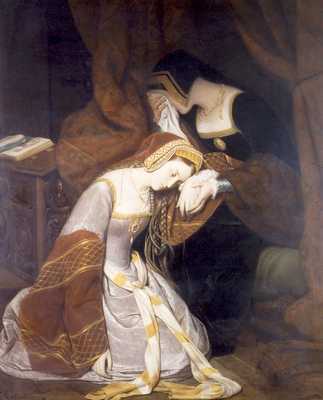
London Tower of London
Conclusions?
So, what are we to make of the haunting. Even the SPR was unable to separate the facts from the fiction invented by Harry Price. But surely the Reverend Smith would not seek help from the SPR without a very good reason for doing so. Alas, we are unlikely to ever know the truth.
SOURCE: http://www.real-british-ghosts.com/borley-rectory.html
ANNE BOLEYN - SOURCE http://www.real-british-ghosts.com/anne-boleyn-ghost.html
Few British phantoms that are reported to haunt as many different locations as the Anne Boleyn ghost. London, Kent and Norfolk all have places where she has reputedly been seen.
Anne Boleyn, Tower of London
Artist - Edouard Cibot
London Tower of London
Most famously, Anne is one of the many Tower of London ghosts. Her wraith has been seen near the King's House and on Tower Green.
In 1933 a guard challenged the spectre of a female, presumably the Anne Boleyn ghost. When he received no response, he lunged at her with his bayonet. The bayonet went straight through the wraith, striking the wall behind her. The guard deserted his post and ran. A very similar thing happened in 1864 but then the soldier fainted and he was court marshalled for being asleep on duty. Fortunately, there were witnesses to corroborate his story and he was acquitted.
Another of Anne's 'haunts' within the Tower, is near the White Tower where the scaffold was erected upon which she was executed. She did not beheaded in in normal manner, kneeling with her head upon the block and by the headsman's axe. She died kneeling erect and her head was severed in one swift blow by a swordsman brought over from France.
St. Peter ad Vincula
Anne's body was left, unattended, on the scaffold for some time. Until someone working at the Tower placed her in an empty arrow box. She was then buried, in an unmarked grave, inside the church of St. Peter ad Vincula which stands within the grounds of the Tower. But she doesn't rest easy.
One night, a Tower of London warden was patrolling outside when he noticed that the windows of the Chapel were illuminated. He climbed a ladder and looked inside. To his amazement he saw a procession led by a woman who reminded him of paintings that he had seen of Anne Boleyn
Ghosts resplendent in clothes that would have been worn in the Tudor court were slowly following her up the aisle. After a few minutes, the figures slowly faded from sight and darkness once again descended on the church.
Kent, Hever Castle, Kent
Although is not known for certain, Hever Castle was probably where Anne Boleyn was born. What is known is that it was here that she met Henry VIII, the King she loved and married, to whom she bore a daughter and by whom she was betrayed and executed.
Anne has been seen on many occasions in various places in the garden. Her favorite haunts seem to be the , old wooden bridge over the River Eden and the area of the great oak tree beneath the boughs of which King Henry VIII courted her.
Maybe she doesn't want to 'move on' because of the happy memories she has about the place. Or maybe she is unable to find rest because of the haunted castles large collection of mementos associated with her.
Norfolk, Legend of Blickling Hall, Norfolk
There is one further story associated with the appearance of the Anne Boleyn ghost at another location that claims to be the place of her birth. The legend is that every year, on the anniversary of her death on 19th May 1536, at Blicking Hall, is seen a black coach drawn by four black, headless horses. And in the coach sits Anne Boleyn with her head in her lap.
Edgehill Ghosts
Perhaps the reason that the Edgehill ghosts haunt the scene of the battle is that it was such a pointless loss of life that achieved nothing.
The Battle
It was 23 October 1662 and it was the first real fighting of the English Civil War. The Royalist Troops were marching to London in support of the King and the Parliamentarian troops intercepted them at Edgehill, half-way between Banbury and Warwick. The heavy fighting went on for three hours and both the Royalist and Parliamentarian armies suffered heavy losses. The Parliamentarian troops withdrew to Warwick Castle but for some reason the Royalists did not push on to London and so both sides could be said to have lost.
Ghostly Armies
The Battle of Edgehill didn't end when the smoke cleared and the dying had taken their final breath. In the weeks that followed, the terrible carnage was often heard and seen re-enacted. In the night sky above Edgehill, the phantoms of the fighting soldiers were observed by several very reliable witnesses. King Charles I, was so intrigued by the reports that he sent a Royal Commission to investigate. They too saw the ghastly spectacle and even recognized some of the protagonists, including Sir Edmund Verney, the King's standard bearer.
The re-enactment continued to be repeated for some time and some people travelled for miles to watch it. Eventually, the appearances became less frequent until they ceased all together.
Edgehill Today
However, to this very day, people report hearing sounds of battle and feeling very uneasy in the area of Edgehill, particularly around the anniversary of the battle. Incidentally, as a result of the Royal Commission's investigation, the Public Record Office officially recognises the Edgehill ghosts. They are the only British phantoms to have this distinction.

No comments:
Post a Comment